
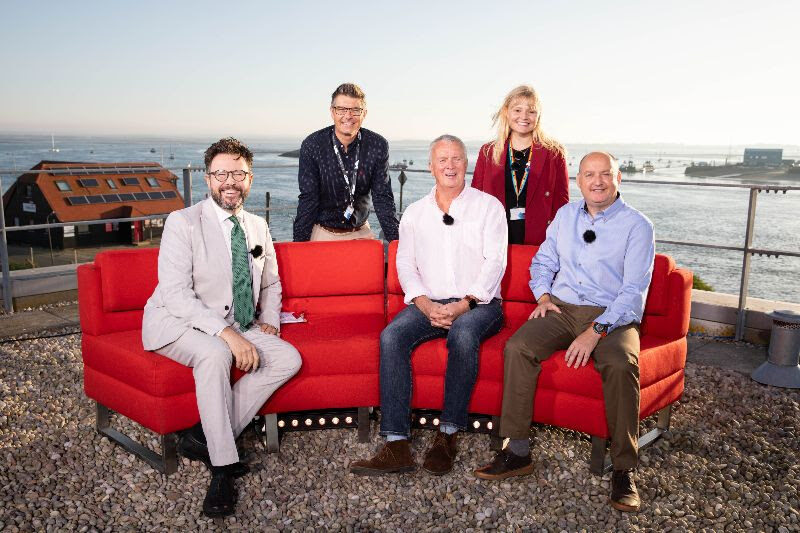
This month’s Stempra Star is Glenn Harris, Senior Media Manager at the University of Portsmouth.
What is your job and how did you get there?
My job is Senior Media Manager (Research Themes) at the University of Portsmouth. I manage a small but brilliant Press and Media team, who generate amazing coverage for the University, particularly around its research and innovation outputs.
My background has mainly been in communication roles in the Higher Education sector but I started out on the other side of the fence as a broadcast journalist at BBC Radio Solent. It was a great role and really gave me an insight into the media. From there, my first comms role was Press and Media Officer at Solent University, where I received my degree in Corporate Communications from. After a couple of years, I left to make the short journey across the city, to become Media Relations Officer at the University of Southampton (via a short spell at Ordnance Survey). I spent 7 years in the role, before taking up my current position at the University of Portsmouth in 2016.
Describe a typical day
Working at a large, global facing, diverse and innovative institution, no two days are the same! The day normally starts not long after waking up with a scan through the latest headlines of the day to see what is making the news agenda and if are there any opportunities for our academics or spokespeople to comment on.
Once any requests and pitches have been sent, next up is helping to get my 2 children off to school and pre-school (which is normally the most stressful part of the day!).
We operate a hybrid working programme, so on Monday and Tuesday I will be in the office and then working from home for the rest of the week. First task is to check and respond to emails and then I’ll check my daily planner to see what tasks and meetings need prioritising that day.
Some days are back-to-back meetings, which can involve planning sessions with the team, meeting an academic to discuss a research project that needs publicity, taking part in cross-team department meetings to represent the media team or with partners on external projects. If there is time, I’ll be able to get my head down to do some writing or content creation for our digital and social media channels.
Other times I will be managing media ops on campus, which can take anything from one hour to the whole day. This week, I had the pleasure of hosting BBC Morning Live on campus to film a report for an upcoming programme, which took the full day to complete.
I try to give myself time on Fridays, when it is usually a bit quieter, to do my data analysis, media monitoring and reporting tasks. It’s great to be able to look at what the team has achieved over the week/month and to be able to demonstrate that to senior management. It really helps to be able to see where there are opportunities to generate more publicity for the University or if we need to adapt our approach to an issue or objective so we can be more effective.
Most rewarding aspect of your job?
It’s probably a cliché but it’s the people that I get to work with, not only in my team, but across the University. I am so lucky to work with colleagues who are talented, passionate and dedicated, it’s a privilege to be their boss. I also get to meet and work with academics who are doing truly life-changing research and to be able to promote their work and show the difference they are making is so rewarding. This is especially so when the media coverage leads to further opportunities for them, whether that is being invited to speak at conferences, offers of collaboration from academia or industry, or additional funding for their work.
Hardest bit of your job?
Time management and juggling such a varied but busy workload. I’d much rather be busy than sat around waiting for a story to land in my lap, but it can feel like a bit of a conveyor belt sometimes, getting one job done and then straight onto the next one, rather than sometimes giving myself the time to reflect on what worked, what didn’t, how could I approach it differently next time.
Tell us about an interesting / challenging case study / project you have recently worked on?
We have an amazing Sport Science department at the University and a couple of their leading academics have been involved in a new report looking at the serious threat extreme heat poses for athletes at the Paris Olympics.
As part of the communications plan with the commissioning body, one of the Team GB Rugby players came down to the University’s Extreme Environments Laboratory, where they can simulate a wide range of environments from polar regions to desert conditions. Our research team put the player through an exercise programme, while simulating the extreme heat conditions athletes could face, and measured the impact on their performance. The results were really startling and it will be interesting to see what happens at the Olympics and if this scenario plays out.
We’ve got some good media opportunities lined up so hopefully we’ll be able to demonstrate our world-leading expertise in this area and get some high-profile media coverage.
Most bonkers thing you’ve done in the name of science communication?
There have been a few! One was drinking vodka made from grains from the Chernobyl exclusion zone! Professor Jim Smith has set up a Social Enterprise producing high quality spirits to support communities in the affected areas and wildlife conservation. To help promote the project, we arranged an interview and photo op with Victoria Gill from the BBC at a bar in London and drank cocktails made from the spirit. We did a similar follow up with Tom Whipple at The Times.
Another was spending the day in a wind tunnel at the University of Portsmouth with Sir Steve Redgrave, Sinitta and Kimberley Wyatt from the Pussycat Dolls for the ill-fated Channel 4 programme The Jump – I don’t think you would ever get those people in the same room at the same time again!
There was also the time we gave the late, great Shane Warne an honorary degree from Solent University during a game at the Rose Bowl in Hampshire in front of the Sky Sport cameras. He got fully robed and we presented him with his degree on the wicket in the middle of the pitch.
Any advice for anyone wanting to follow in your footsteps?
Be passionate and enjoy what you do. I feel very lucky that I get to do an incredible job, working with brilliant people and telling amazing stories. I still get incredibly excited when I see a newspaper article or hear a radio report on a story that I have pitched or promoted.
Relationships are key. Whether that’s with colleagues that you work with, journalists that you engage with or other science communicators, you need to have good relationships and put time and effort into maintaining them. I couldn’t do the work I do without the team I have, I wouldn’t have the stories to tell without knowing the academics doing their work and there would be no-one to see them if I didn’t know who the right contacts are to speak to.